12 Animal Footprints Clipart: A Wild Collection for Creative Projects
Exploring the Visual Character and Versatility
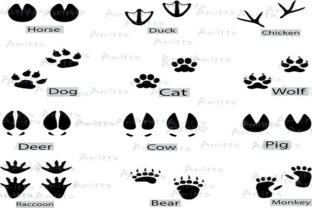
The 12 Different Animal Footprints Clipart set is more than a simple collection of shapes. It’s a toolkit for visual storytelling. Each illustration captures the distinct personality of the animal it represents, from the delicate, paired impressions of a deer to the broad, powerful print of a bear. The style is clean, scalable, and intentionally versatile. These aren’t overly stylized cartoon prints; they are recognizable, semi-realistic silhouettes designed to integrate seamlessly into professional work. The overall appeal lies in their clarity and authenticity, making them suitable for both whimsical and serious applications.
This collection includes a large variety of animal footprints, covering common domestic and fascinating wild species. You’ll find deer tracks, cow tracks, bear tracks, wolf tracks, rabbit tracks, horse tracks, chicken tracks, duck tracks, dog tracks, cat tracks, raccoon tracks, pig tracks, and monkey footprints. Each is delivered as a high-resolution, 300 dpi digital download. Crucially, every illustration is provided in three formats: a PNG with a transparent background for layering, a PNG with a white background for quick use, and an SVG file for infinite scalability without quality loss. This makes the set a true premium asset for any designer’s library.
Practical Applications for Designers and Creators
Where does a set like this truly shine? Its strength is in niche and thematic projects. For outdoor brands, hunting guides, or nature blogs, these footprints provide authentic brand identity elements. Imagine a hiking trail map using different prints to indicate wildlife zones, or a pet store’s packaging design featuring a playful dog and cat track pattern. The versatility extends to editorial design; a magazine article about animal behavior can use these as subtle, informative icons in the margins.
For entrepreneurs and small business owners, the applications are highly practical. A children’s educational brand can use the prints in web design for interactive games or as part of social media graphics for engaging posts. Crafters and hobbyists will find them invaluable for personal projects like custom stationery, scrapbooking, or t-shirt designs. The commercial licensing typically included with such assets allows for their use on products for sale, which is a significant advantage. When evaluating a project’s fit, consider the tone: the wolf and bear prints add a rugged, adventurous feel, while the rabbit and duck prints lend a softer, more approachable charm.
Integrating Footprints into Your Design Workflow
Using this clipart effectively is about more than just dropping an image into a file. It’s about understanding visual hierarchy and context. These elements work best as supporting actors, not the main headline. Use them to guide the viewer’s eye, create borders, or reinforce a theme without overwhelming the primary message. For instance, a line of raccoon tracks could lead to a call-to-action button in a web design, or a cluster of chicken tracks could frame a product description on an e-commerce site.
A key consideration is pairing. These graphic elements need to complement, not clash with, your chosen typography. If you’re using a bold, modern sans serif font for your headings, the clean lines of the clipart will likely harmonize well. A more rustic serif font or a casual handwritten font could also pair effectively for a nature or farmhouse aesthetic. Always test your combinations. Place the footprint graphic next to your text block—does it feel balanced? Does it support the message or distract from it? The goal is cohesive design where every element serves a purpose.
Choosing and Using Your Digital Assets
When you acquire a set like the 12 Different Animal Footprints Clipart, you’re investing in design assets that save time and enhance creativity. Before using them commercially, always review the specific license. Most reputable sources grant broad permissions, but it’s due diligence to confirm. Evaluate the file quality: the 300 dpi resolution is standard for print, ensuring your designs look sharp on flyers, posters, and product labels. The SVG format is your best friend for large-scale applications like signage or vehicle wraps, as you can scale it to any size without pixelation.
Think about consistency. If you’re building a brand identity for a wildlife sanctuary, you might use a consistent subset of prints—perhaps the bear, wolf, and deer—across all materials. This creates a recognizable visual language. For a more dynamic project like a seasonal marketing campaign for a farm, you could rotate the prints to match the animals featured. The practical guidance here is to experiment. Open the PNG files in your preferred design software, play with color overlays, adjust the scale, and see how they interact with your other creative font choices and layout structures. The real value of a resource like this is unlocked through thoughtful, context-aware application.